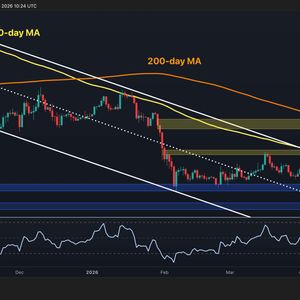
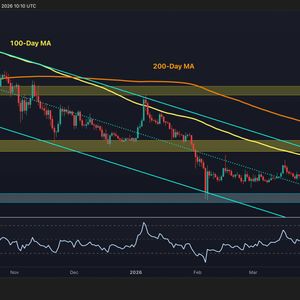
Over the past week, crypto markets have moved without direction. Bitcoin fluctuated within a narrow ~2% range, total market cap showed similar stability, and even Ethereum’s ~6% move stayed within typical short-term volatility. There is no clear trend, no breakout, and no strong momentum. This is what a sideways market looks like. For holders, this creates a specific problem. Price appreciation stalls, but exposure remains. Capital sits in wallets, waiting for the next move. In practice, many portfolios become passive by default. Sideways Markets Turn Holding Into Opportunity Cost In a trending market, doing nothing can still produce returns. In a sideways market, it usually doesn’t. If BTC trades within a tight range for weeks, it provides no meaningful gains but continued volatility exposure. This creates an opportunity cost. The asset remains deployed in risk terms, but not in productive terms. At the same time, user behavior has shifted. Instead of chasing high-risk yield strategies, holders increasingly look for: liquidity predictable returns simple mechanisms that do not lock capital This is where structured savings products that make crypto work enter the picture. Making Crypto Work Without Trading There are only a few ways to extract value from a sideways market: trade short-term volatility use assets as collateral generate yield on holdings Trading requires time and precision. Borrowing introduces leverage and risk management. Yield, when structured properly, remains the most straightforward approach. The key variable is not the yield itself, but the conditions attached to it: Is capital locked? Are rates transparent? Can funds be accessed instantly? Most platforms still rely on lock-ups, tiered rates, or token requirements. That structure limits flexibility exactly when flexibility matters most. Clapp Savings: Liquid Yield Instead of Passive Holding Clapp.finance offers two savings formats designed around different holding strategies: flexible and fixed. Flexible Savings: Liquidity First Flexible Savings allows users to earn on crypto balances without committing assets. 5.2% APY on stablecoins and EUR Daily interest payouts with automatic compounding No lock-up period Instant deposits and withdrawals, 24/7 Minimum entry from 10 EUR/USD Funds remain fully accessible at all times, which changes how capital behaves in a sideways market. Instead of choosing between holding and acting, users retain both options. This matters in practice. If the market breaks out, capital can be redeployed immediately. If it doesn’t, the position continues generating yield. Fixed Savings: Predictability Over Flexibility For longer-term positioning, Clapp offers fixed-term savings : Up to 8.2% APR Terms from 1 to 12 months Guaranteed rate locked at entry Optional auto-renewal This format suits holders who do not plan to react to short-term market movements and prefer defined returns over optionality. Why Liquidity Defines the Current Cycle The structure of the current market cycle favors liquidity over maximum yield. Several factors explain this shift: volatility remains high even without trend macro-driven moves can occur abruptly users avoid being locked during market inflections In this environment, daily compounding with instant access becomes more relevant than nominal APY alone. Clapp’s model reflects this shift. Rates are clearly defined, payouts are predictable, and capital is not restricted by complex conditions or hidden tiers. Final Thoughts Sideways markets tend to test patience. They also expose inefficiencies in how portfolios are managed. Crypto does not need to remain idle while prices consolidate. The infrastructure to make it productive already exists. The difference lies in choosing structures that do not restrict access or obscure returns. Clapp’s savings products approach this directly: flexible accounts for liquidity and daily yield fixed accounts for predictable returns In a market without direction, the goal shifts from timing to utilization. Capital that continues to work is easier to hold through uncertainty. Disclaimer: This article is provided for informational purposes only. It is not offered or intended to be used as legal, tax, investment, financial, or other advice.